Kinredgarten Saulės Gojus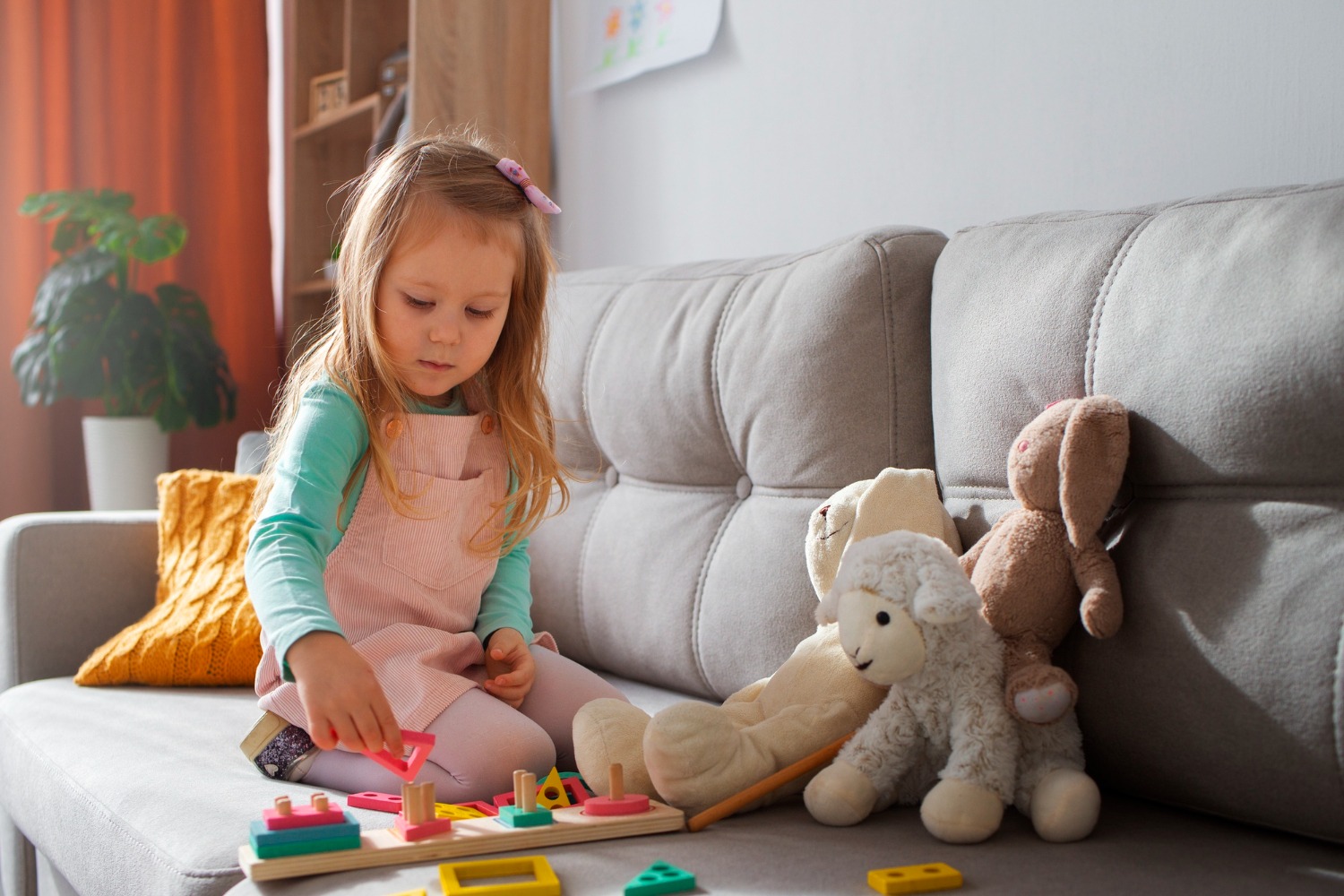
We often find ourselves in a recurring situation at home in the evenings: our child looks at us, clutching a beloved toy, and begs to be allowed to play a little longer – even though the clock tells us that a toothbrush is already waiting impatiently for them in the bathroom. When denied permission, the child gets upset and throws the toy aside, or starts bargaining, or begs for just one more minute – as if checking whether the agreement that was valid yesterday is still valid today. In moments like these, it can be difficult for an adult: you want to remain gentle, but at the same time not break the established rules.
Boundaries in child-rearing are not a punishment or a matter of enforcing rules for their own sake. They are an effort to ensure clarity, consistency, and a respectful relationship, which helps the child feel safer in situations where there are many desires, emotions run high, and self-control is still a bit too difficult.
Boundaries are not a punishment
Children learn gradually to pause, wait, listen to others, and compromise. When a desire is very strong, it can be hard for a child to understand why it can’t be satisfied right here and now – why they can’t watch one more video or why they shouldn’t push a friend aside to grab the toy car they both want before the friend does.
That is exactly why boundaries are necessary. They help the child understand that an adult is there to guide them, showing what is safe and when it is time to stop. When agreements are clear and consistent, the child doesn’t have to constantly guess how the people around them will react to a given situation.
Through everyday situations, the child learns to observe themselves: I’m angry, I’m disappointed, I want something, but not everything happens right away just because I really want it. This is how the child learns to wait, negotiate, share with others, and gradually understand that other people may also have things that matter to them, or experiences that feel difficult or upsetting.
When the world remains clear
A child tests boundaries not because they want to “defeat” an adult, but because they want to make sure, again and again, that the world is still just as clear and predictable. If one evening the blocks go into the box, and the next they remain scattered on the floor, it is hard for the child to figure out what is expected of them.
An adult’s firmness does not mean indifference: even when we see that the child is angry, sad, or frustrated, we must be able to remain calm and uphold the agreement: “I can see you really want to play some more. But now we’ll put the toys away because it’s time for bed. When you wake up tomorrow, you’ll be able to play again.” A simple explanation of the situation acknowledges the child’s feelings while also setting clear boundaries. When the same rule applies day after day, it gradually becomes clear to the child: the adult isn’t angry or punishing them – we simply both know where the boundary lies.
Calm words help children listen
It is very difficult for an upset or tired child to listen to long explanations. In such cases, short, clear sentences spoken in a calm tone help the most. Instead of “Don’t shout!”, we can say, “Let’s speak more quietly”; instead of “Don’t run!”, “Let’s run in the yard”; instead of “Don’t draw on the wall!”, “Let’s draw on paper.” The child may continue to be angry, but they unconsciously register the calm adult voice, which becomes a guide that eventually helps them manage their behaviour.
A child will more easily understand what not to do if we do more than simply tell them what they cannot do and also offer an alternative. By constantly hearing only “no”, the child is left with the same unfulfilled desire but doesn’t know how to satisfy it. When we show them where they can run, draw, or shout, it makes things easier for them: they can run outside, draw on a sheet of paper, and when out on a hike, it is fun to shout their name and listen to the echo.
There is room for feelings, but agreements remain
Showing gentleness doesn’t mean we have to agree to everything the child wants. Through gentleness, we show that we see the child’s feelings, but we don’t abandon clear agreements. “I can see you’re upset because you want to play some more – but now it’s time to brush your teeth.” A sentence like this tells the child two things: the adult acknowledges their feelings, but the daily routine won’t change.
It is also important for the child to feel that their emotions are not something bad. It is okay to get angry, feel disappointed, or cry – but even experiencing a very strong emotion doesn’t mean it is okay to hurt others, throw things, or ignore agreements. Gradually, the child learns to recognise what is going on inside them and to find an appropriate way to express difficult feelings.
Giving children choices makes agreements easier
A small but clear choice can sometimes help a child manage their emotions. The agreement remains, but the child can choose how to participate in it: “Do you want to put the toys away by yourself, or together with me?” If it’s time to get ready for bed, you can ask: “What would you like to take to bed this time – the bunny or the teddy bear?”
The child feels that their wishes are being heard, but the boundaries remain clear: the adult doesn’t back down – they simply help the child accept the agreement more easily.
Consequences help children understand
Setting boundaries is especially clear when consequences arise directly from the situation: if a child throws a toy, we put it aside for a moment so everyone stays safe; if they spill water on the floor, we can ask the child to help clean it up. In this way, the child gradually comes to understand the connection between their actions and the consequences. The consequence is not intended to scare the child but to help foster a sense of responsibility.
Boundaries gradually become an internal guide
Boundaries teach more than simply following rules – they gradually nurture a child’s ability to pause, wait, and seek more peaceful ways to resolve conflicts. By learning to say “I’m angry” instead of hitting, and to ask instead of taking, the child gradually develops more appropriate and constructive ways of interacting with others.
Clear and consistent agreements become the child’s internal guide. A calm adult voice and a steady presence gradually help the child develop a sense of security: their feelings are accepted, and they can learn how to manage their behaviour. Then boundaries become not a battleground, but a safe place to grow.