Kinredgarten Saulės Gojus
Parents often ask themselves: when should I start teaching my child to read? Children, meanwhile, often discover letters quite unexpectedly: after constantly seeing a sticker with the first letter of their name on the cabinet, one day they start trying to trace it with their finger in the sand or arrange it with building blocks. This is how the journey into reading and writing naturally begins.
In preschool, children learn most naturally through play. Therefore, when discussing how to teach reading, it’s worth first noting what sparks a child’s curiosity. The beginning of reading and writing involves not only recognizing letters but also the ability to listen to sounds, notice shapes, control one’s hand, and sense that symbols can convey something important.
Letters you can touch
Children remember letters more easily when they can not only see them but also touch them, arrange them, or mold them. Activities such as letter lotto, memory games with letters, molding letters out of playdough, or arranging them with building blocks are ideal for this.
In these activities, children notice the shapes, lines and directions of letters. They don’t need to know how to write it correctly just yet—first, they want to explore it. When a child has the opportunity to get to know a letter in various ways, it becomes easier and more fun for them to learn to write letters later on.
First, a child learns to listen
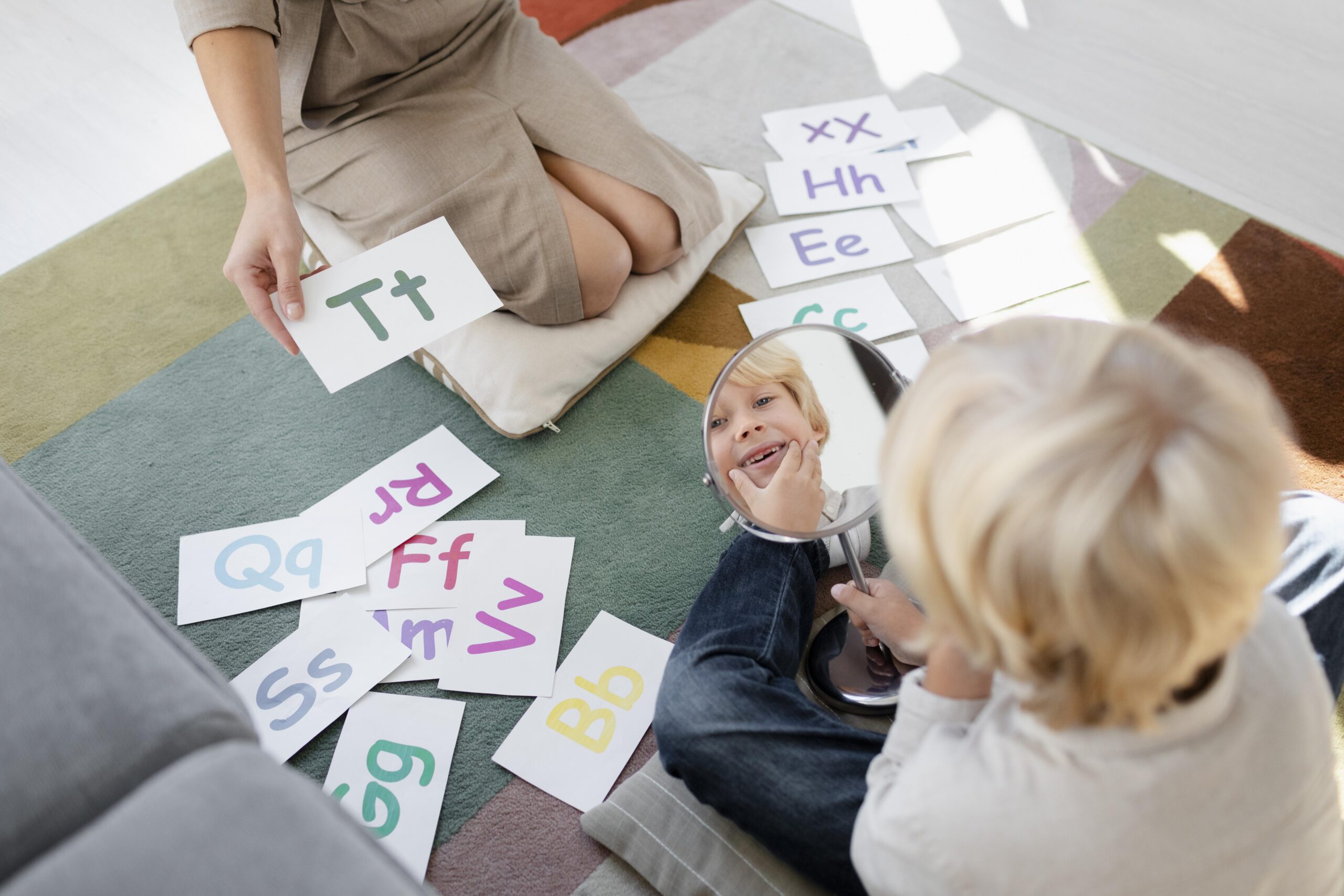
Before learning to read, a child first learns to listen to language: to hear how a word begins and how it breaks down into syllables. Simple games and questions help here (“What sound does your name start with?”, “What do you hear at the beginning of the word?”), clapping to count syllables, or short rhymes.
When parents are considering which games for learning to read might be suitable for their child, it’s worth remembering: reading begins with sounds, rhythm, syllables and engaging games.
Playing with words
Word puzzles, flashcards, simple board games, or crossword puzzles help children connect images, sounds, and words and can serve as an engaging introduction to reading.
Parents naturally wonder how they can introduce children to letters and teach them to read through play without it becoming a source of pressure. The answer lies in small but engaging experiences for the child. A child learns when driven by curiosity to find out what’s written or which word card matches the picture.
Stories help children understand the meaning of letters
Creating fairy tales, staging them, and playing role-playing games help children see that letters and words are an integral part of play, creativity, and communication. After all, it’s so much fun to “write a prescription” for your sick doll or give a name to the city you’ve built with building blocks!
In these activities, letters and words take on meaning because they’re used not as isolated tasks, but as a way to tell stories, negotiate, create, and share thoughts.
The hand gradually prepares for writing
When a child connects dots, draws a line, or traces with a finger in the sand, their fine motor skills strengthen—their fingers become more dexterous, and their eyes and hand learn to work together. The child gradually learns to control a pencil, to press a crayon more gently or more firmly, and to draw a line from start to finish. All of these are small but important steps toward writing.
The most important thing is to maintain curiosity
The foundations of reading and writing are laid most quickly when a child is allowed to explore at their own pace. Through play, they can touch, listen, repeat, make mistakes, and try again. At this age, the most important thing is not to rush the child, but to keep their curiosity alive.
When letters are introduced through play, they become small, everyday discoveries. Over time, letters become familiar symbols that gradually open the door to the boundless world of creativity and knowledge.