Kinredgarten Saulės Gojus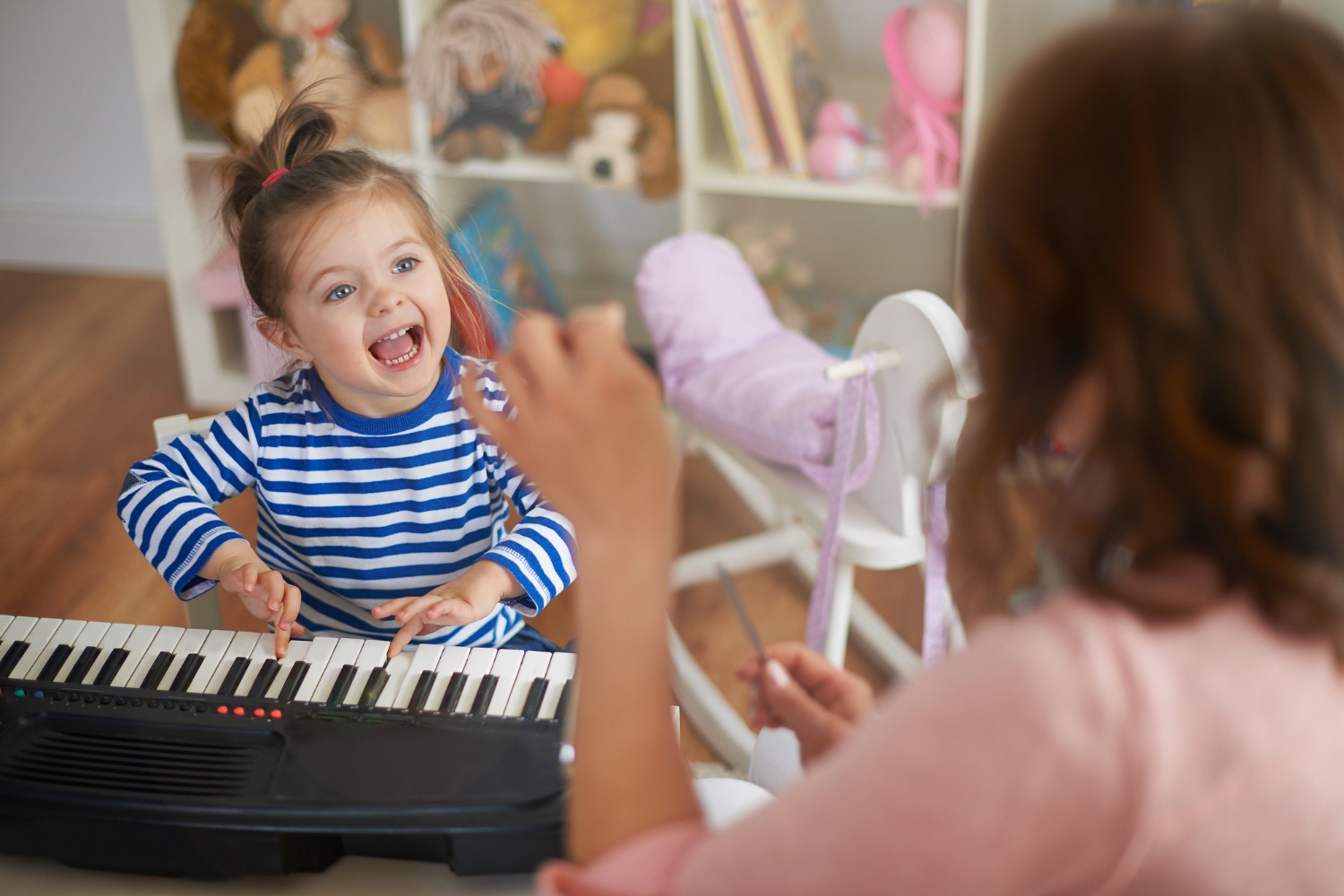
Sometimes the kindergarten day begins not with words, but with a melody, rhythmic clapping, or moving together in a circle. Children naturally respond to music – some sway to the rhythm, others join in singing, while some simply listen quietly. In these moments, music becomes more than just a fun activity: it helps children share emotions, relax, and feel connected to one another.
At Saulės Gojus, music is an important part of everyday learning. It supports children’s holistic development by helping them recognise emotions, strengthen concentration, build relationships, and express themselves more confidently.
Music helps children recognise emotions
Children do not always find it easy to express their feelings in words. Music, however, can become a natural language of emotions: anger may be released through energetic movement, sadness through a gentle melody, and joy through singing at the top of one’s voice.
A calm piece of music can help a child settle after active play, while a cheerful song makes transitions between activities easier. Through sounds and rhythm, children gradually learn to recognise not only their own emotions, but also the feelings of others. This is why music becomes such a natural and meaningful part of everyday life in preschool.
Music develops attention and language
Learning songs naturally strengthens children’s memory and attention. Repeating choruses, memorable rhythms, familiar melodies, and musical patterns help children focus more easily and follow the flow of an activity.
Music is also closely connected with language development. By listening to songs and repeating words, rhymes, and rhythms, children naturally expand their vocabulary, improve pronunciation, and become more sensitive to the sounds and rhythm of language. Musical activities therefore strengthen not only language skills, but also attention, memory, and overall cognitive development.
Music teaches children to be together
When children sing or make music together, they learn much more than melody and rhythm. They learn to listen to one another, wait for their turn, adapt to the group, and participate together in a shared activity.
One child claps, another taps a rhythm on a drum, while a third joins in singing – and gradually, their different sounds come together into shared music. Through experiences like these, collaboration, empathy, and a sense of community naturally grow stronger.
It is no surprise that music celebrations and musical activities in preschool often become especially joyful and meaningful experiences for children.
Sound and movement encourage creativity
Through musical activities, children naturally discover their creativity. They improvise, create sounds, experiment with rhythm, and explore how music changes when it becomes softer or louder, faster or slower.
Music also naturally engages the body. Singing helps develop breathing, movement to music strengthens coordination, and rhythmic games support both fine and gross motor skills. When children dance to the sound of rain, sway like trees in the wind, or clap along to a rhythm, they learn at the same time to listen, move, feel music, and express themselves creatively.
Music in kindergarten often gives children much more than simply learning songs. It remains in their memory as a feeling of warmth, safety, togetherness, familiar voices, and shared joy – experiences people often carry with them long into adulthood.