Kinredgarten Saulės Gojus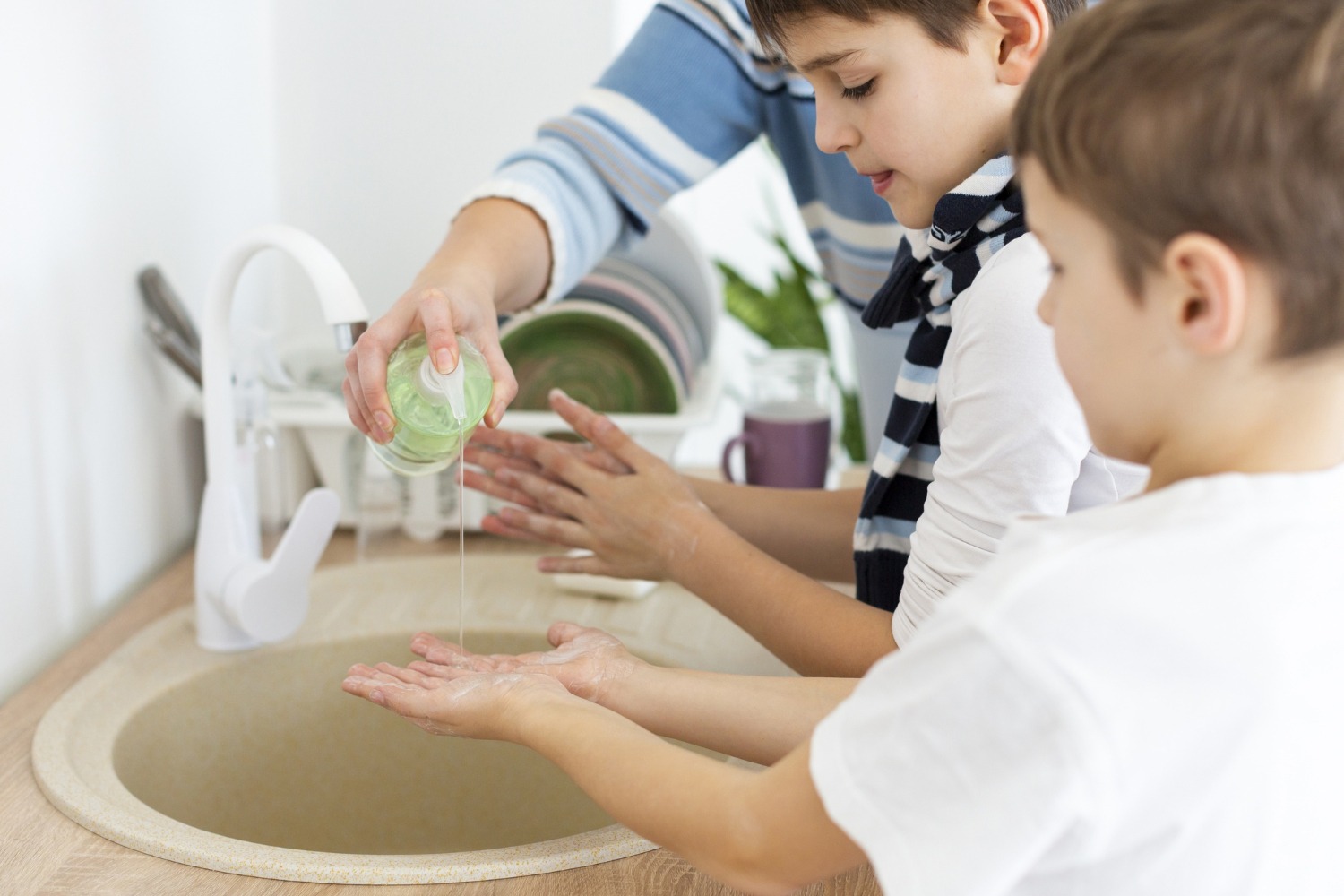
Explaining handwashing to children might seem simple – after all, we wash our hands many times a day. However, for a young child, handwashing, brushing their teeth, or personal hygiene in general is not yet self-evident. That is why it is important to start building these daily habits together from an early age, explaining them in simple terms and setting a patient, consistent example.
The power of example
Young children learn by watching. They quickly notice how adults behave: how they take care of themselves and what habits they follow. That is why leading by example is the most effective way to teach.
When we wash our hands in front of children, they gradually come to understand that this is a natural and important part of everyday life.
Explanation and demonstration
For preschool children, it is important not only to perform an action but also to understand why it matters. That is why it helps to explain in simple terms why we brush our teeth or wash our hands – for example, by describing the invisible germs that get onto their hands after playing or being outside.
Demonstration also makes learning easier. When adults patiently show what to do, and repeat it when needed, hygiene habits become clearer and easier for children to understand.
Daily routine – the foundation of habits
Habits form most easily when they become part of a daily routine – for example, washing hands before meals and after coming in from outside, and brushing teeth in the morning and before bed. This repetition helps children see these actions as a natural part of everyday life.
Encouraging independence
It is very important for children to feel that they can do things on their own. If a child still finds it difficult to wash their hands or brush their teeth independently, it is worth letting them try – for example, by turning on the tap themselves. Although they may need help at first, these experiences build independence and self-confidence. The adult’s role is simple – to be there, encourage, and help only when truly needed.
Habits formed through play
Children are more willing to learn when an activity feels fun. Hygiene habits can be turned into a game: for example, singing a short song while washing hands, or using a colourful chart where the child marks each time they brush their teeth.
These playful elements make the experience more enjoyable and encourage repetition. Over time, these actions become a natural part of the child’s daily routine.